

Patient Evaluation Scoring Method
Hospitals typically evaluate patient experience surveys using the “Top Box” scoring method. With this approach, only the highest possible response is counted as a positive score. For
example, for questions with response options such as Never, Sometimes, Usually, and Always, only “Always” is included in the hospital’s score. A Top Box score of 75% means that 75% of
patients selected the highest possible response.
Importance of Measuring Patient Experience
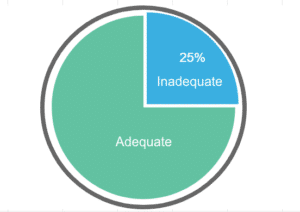
Studies show 25% of ER patients have inadequate health literacy, meaning they have difficulty participating in medical decisions, following medical recommendations and attending follow-up appointments. Better provider-patient communication helps avoid post-discharge adverse events and readmission.
Chronic conditions in the ED:
o Help patients establish follow up care, especially if they need medication refills or a chronic condition has worsened. Often clinics (both primary and specialty) can have waiting lists, especially if a patient has not been seen in a year or more. This leaves patients feeling especially vulnerable and unsure of their treatment plan.
Patient Experience Survey Tips
Sample questions from Patient Experience Surveys:
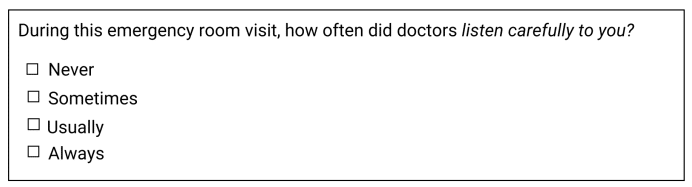
Often patients in stress or in pain are unable to communicate clearly. Other patients may be well versed in their chronic conditions and can offer valuable information about their health. It is important to listen to what your patient is trying to tell you.
- Do not interrupt patients when they are speaking. Refrain from asking a question or voicing an opinion until they have finished speaking.
- Provide encouragement if they are having trouble communicating with you or are struggling to describe their symptoms. Show empathy.
- Show the patient that they have your attention while they are speaking (even if you are mentally juggling the care of multiple patients!). Come all the way into their room. Sit down with them. Make eye contact.
- Be aware of the non-verbal cues you give the patient. Even if the patient is giving you additional information that you do not need, or is making suggestions about their care that you do not agree with, be respectful in your response.

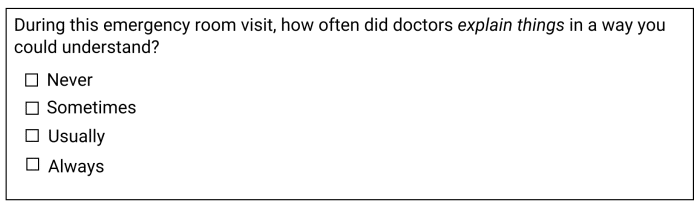
Although the approach to this is not an exact science and may vary considerably by patient, the majority of patients respond negatively to physicians who do not keep them informed and do not promote shared decision making for their care. When patients feel they understand their diagnosis and care plan, they have an increased level of personal control during a time that is inherently stressful (like a visit to the ER).
- Explain to patients why you are ordering certain tests or why you are recommending certain follow-up care. Give them an opportunity to ask questions. Remember that most questions stem from a patient’s desire to understand rather than an attempt to challenge their physician. Keep the nursing staff informed about your decision-making process so they can help explain things to patients as well.
- Decision aids are often helpful to patients. These can be provided in print, on video within the patient room, or via web links. Sometimes drawings are helpful when explaining organ health or how a diagnosis can affect different body structures. Visual aids can also assist when there are language barriers.
- Encourage patients and the family accompanying them to write down questions they want to ask the next time you visit with them. Often, they are too overwhelmed with information to think about what they want to ask on that first interaction. The family often helps answer patient experience surveys, so it is important to understand if the patient wants any family present included in discussions. Return to the patient’s room (as ED flow allows) to give them the opportunity to ask questions.
- Avoid speaking with medical jargon or with vague generalizations. For example, instead of telling a patient what their A1C is, tell them what their average blood sugar was over the last 3 months. Explain to them what this means in terms of their health. Instead of telling them to get “adequate” sleep or water each day, give them specific recommendations.

- Make sure patients understand their discharge instructions. For visits that end with symptom-based diagnoses that are vague, ensure the patient understands what to watch for and what to do should “red flag” symptoms arise. Utilize the “Teach Back” method and encourage questions. Ensure the nursing staff is fully informed of all discharge instructions so they can adequately explain care plans and follow-up to patients
Chronic Conditions with no sudden or emergent exacerbation:
- Follow-up with primary care or specialist. Often this generates patient complaints; ED providers should acknowledge patient concerns about condition and explain they are asking them to f/u with primary NOT because they don’t have time for the patient, but because they are not the best provider to treat that condition.
Additional recommendations for communicating with patients who use Artificial Intelligence (AI) or online resources to better understand their symptoms or diagnoses can be found through this Link.
Many patients arrive in the ED with a preconceived idea of their diagnosis based on information they have found online. When a physician’s assessment differs from what the patient expects, it can lead to frustration or decreased trust. A helpful approach is to acknowledge the patient’s efforts to learn more about their health, then respectfully explain how their individual clinical presentation and diagnostic findings support a different conclusion. Taking the time to validate their concerns while providing a clear, compassionate explanation can strengthen the patient-provider relationship and improve the overall patient experience.